Perfect Prime Rib
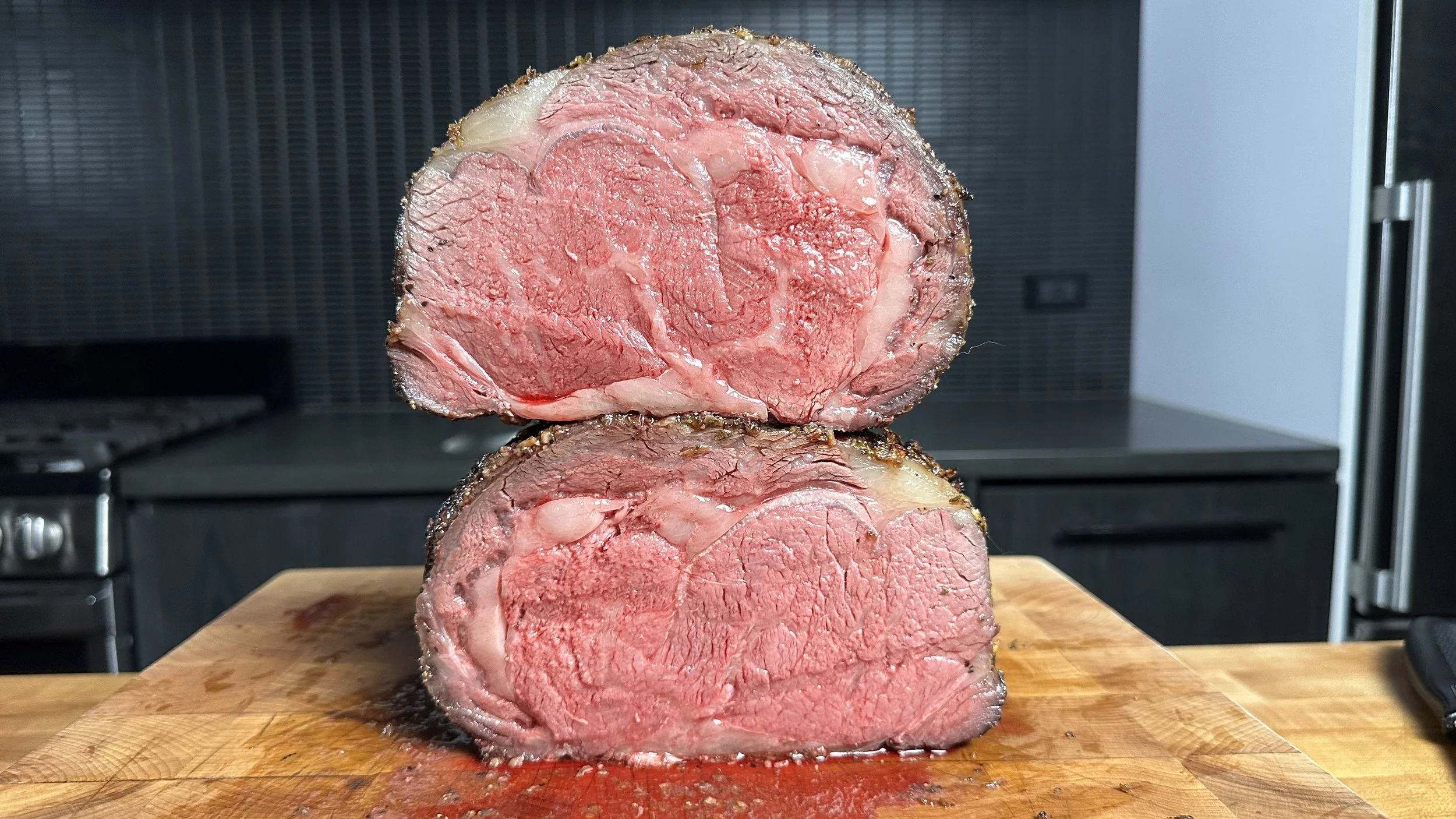
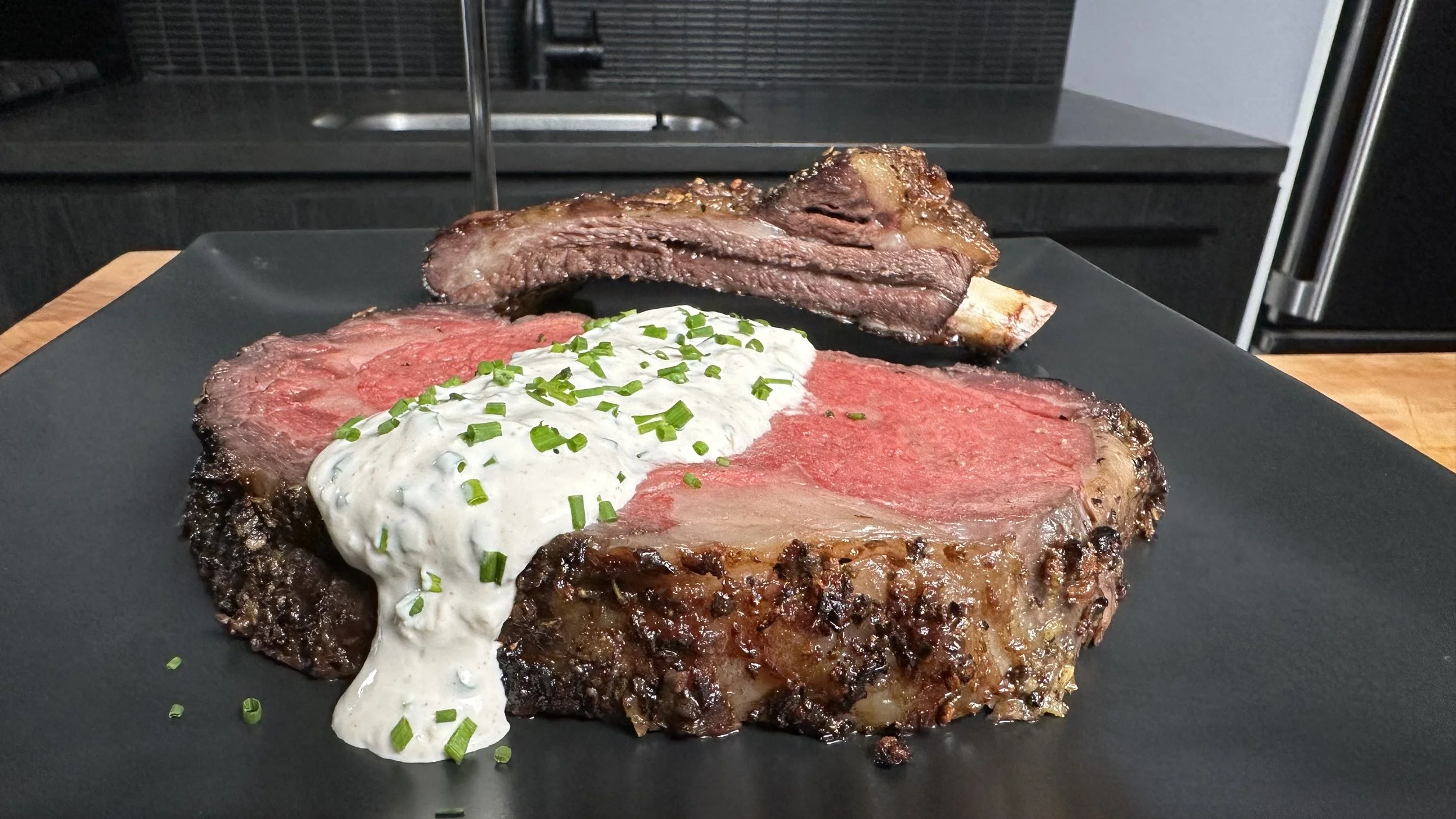
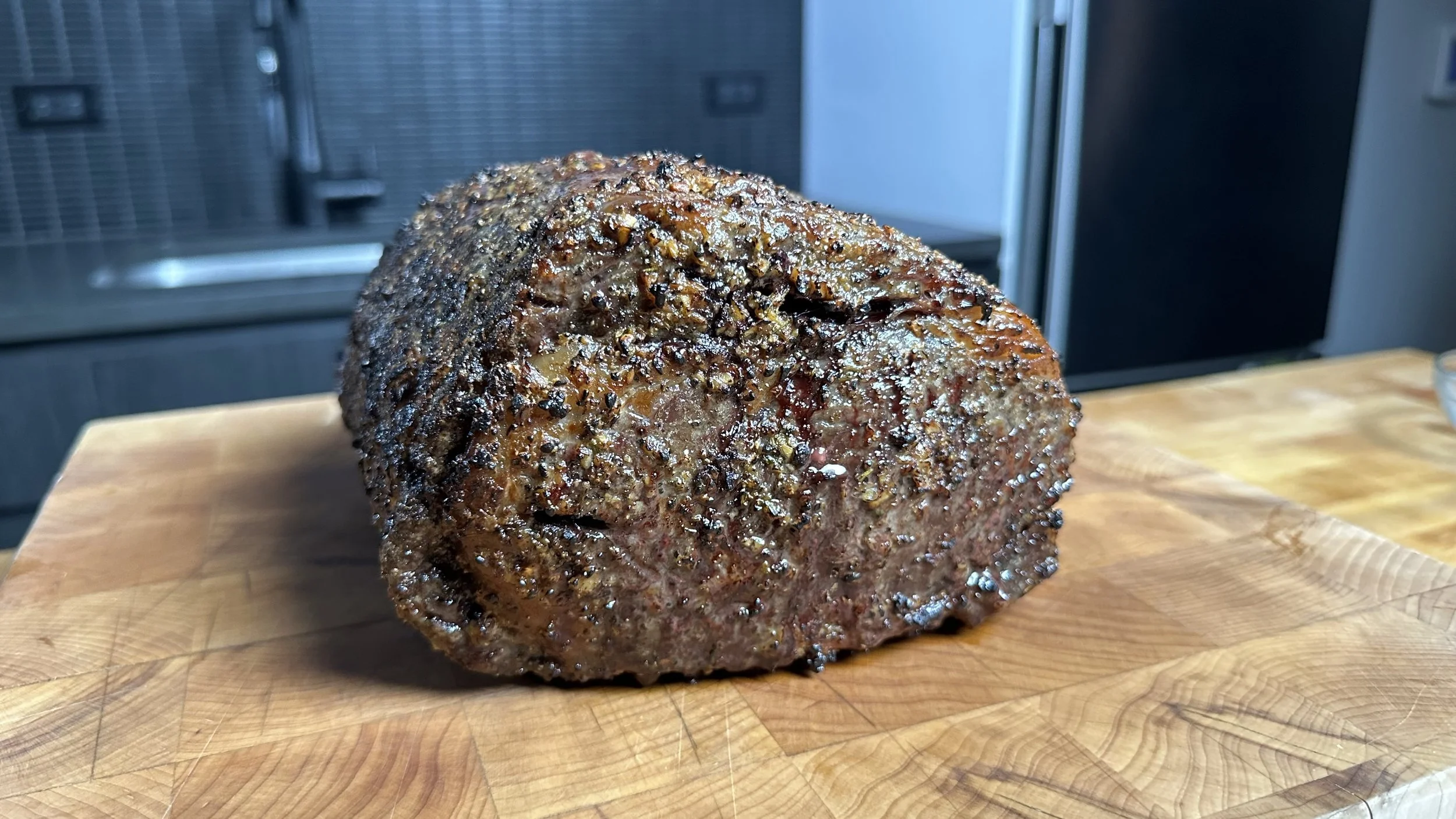
Prime rib can go two ways. The first is a pale, overcooked slice of roast beef. The grey meat is tasteless - covering it in mashed potatoes and gravy is the only way to justify consuming it. The second is a rosy pink and juicy slice of perfection. The salty crust gives way to a tender medium rare ribeye, enjoyed next to a dirty gin martini with blue cheese olives. Our goal is the latter.
Choose the Right Roast:
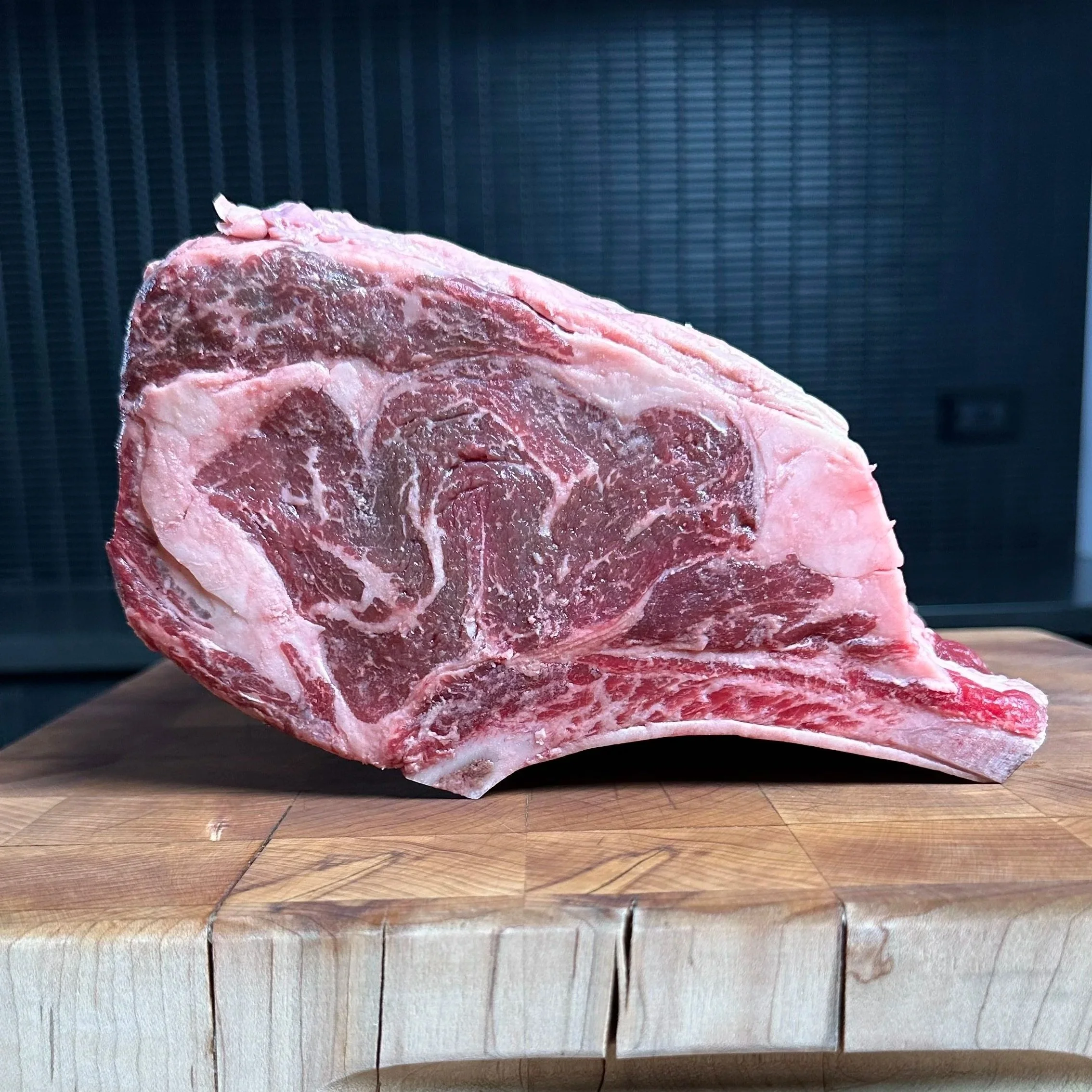
Finding a roast with great marbling is critical. If buying a whole sub primal, sort through the options at your supermarket. Look through the plastic on both ends, you’ll find that the difference in marbling varies greatly. If you can’t find a suitable roast, take a look at the strip loins. A well marbled strip beats a lean rib roast any day of the week – you can use this same process!
Bone-in or Boneless?
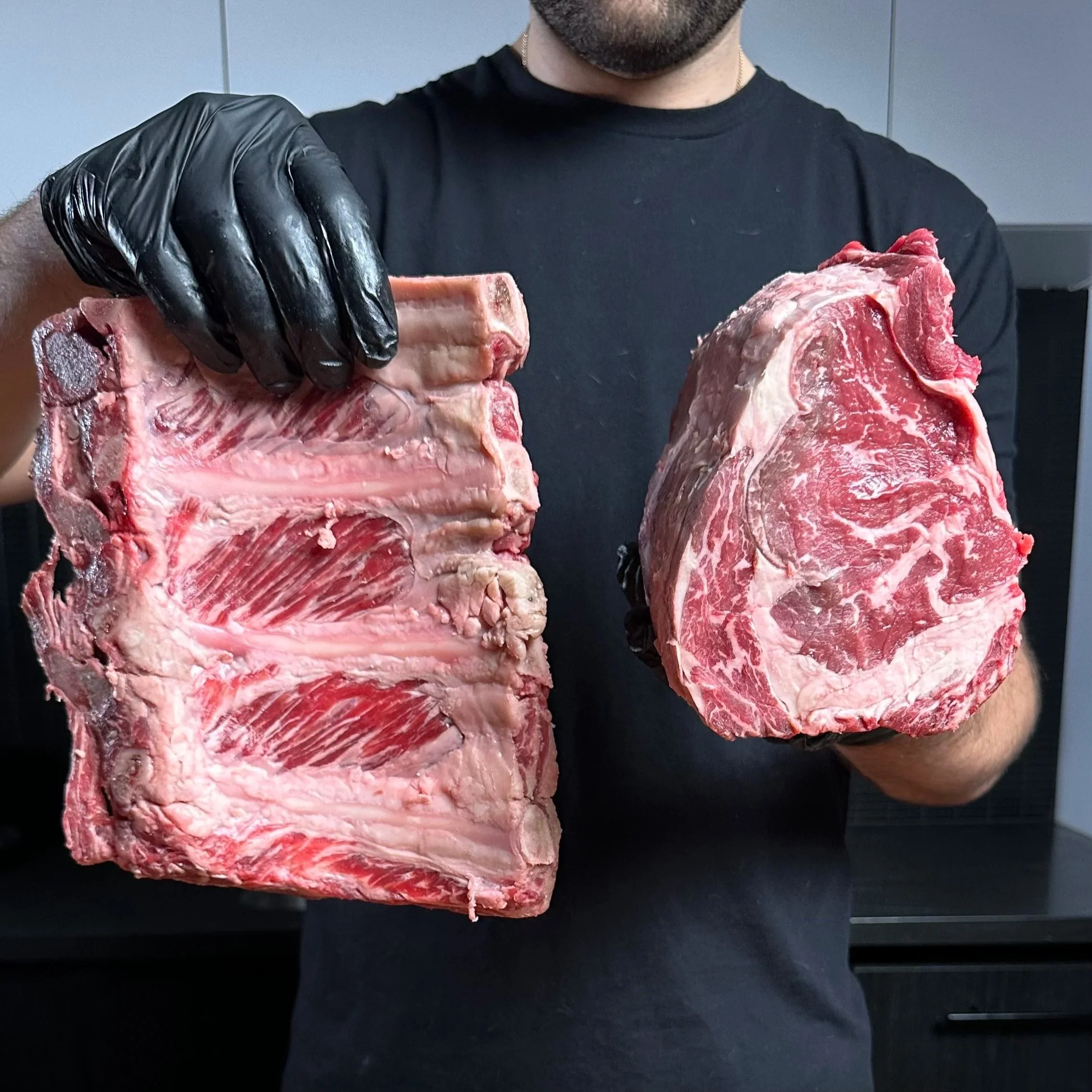
There’s nothing like eating meat off a bone… by removing the bones and cooking the prime rib separately we get an optimal end product for each. The bones act as a heat barrier and by removing them, the top and the bottom of the roast will cook evenly with more flavorful bark on all sides of the prime rib. If you use a boneless prime rib you can follow the same steps just leaving off the cooking of the bones.
Dry Brine your Roast:
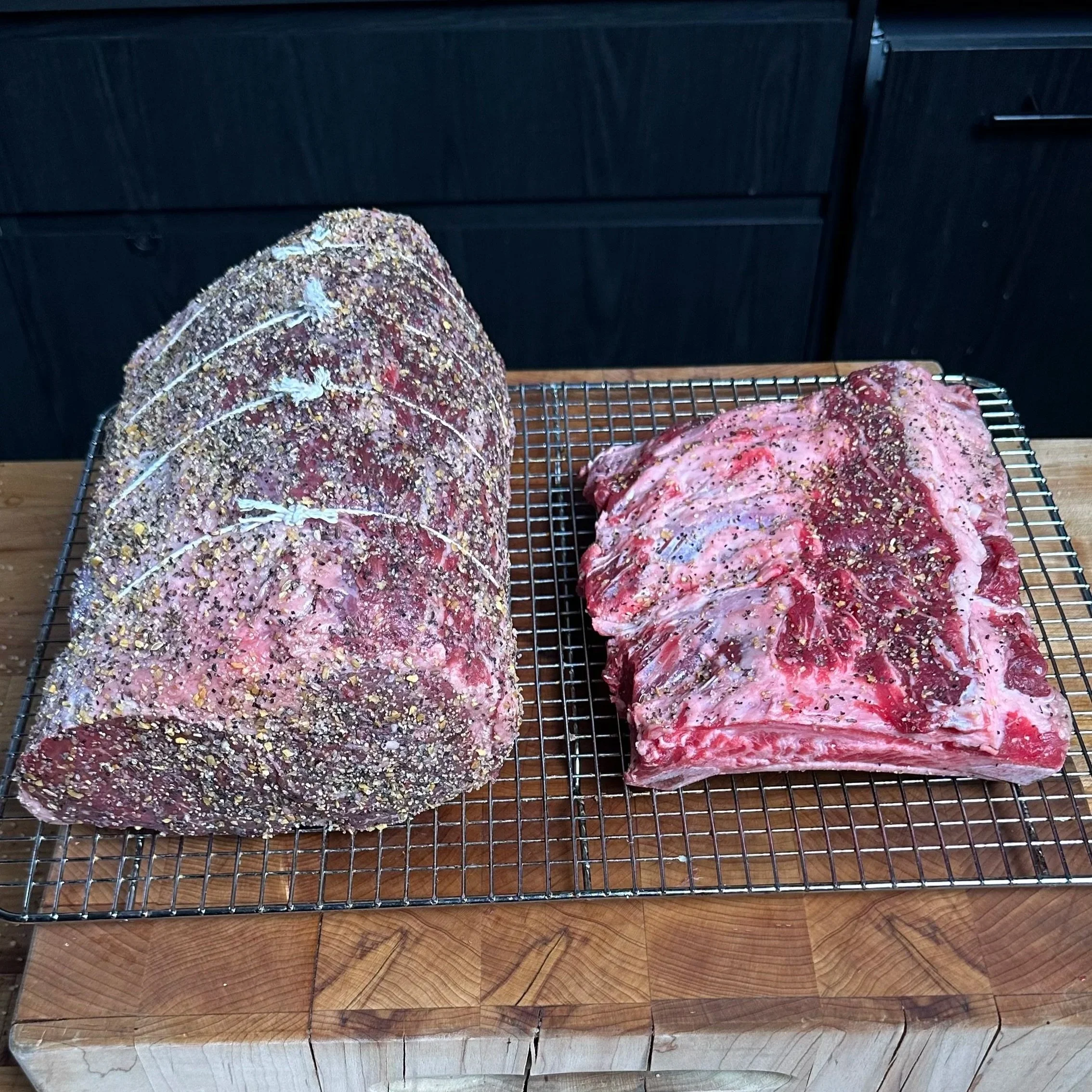
Dry brining involves salting or seasoning the day before cooking, leaving it uncovered in the fridge. This dries out the exterior for a better crust – and most importantly in this case, seasons the meat deeply. Due to the surface area issue mentioned above, this is a great way to avoid a bland interior. It also prevents the crust from becoming too salty since the initial round of salt has a chance to absorb beyond that level.
The Crust:
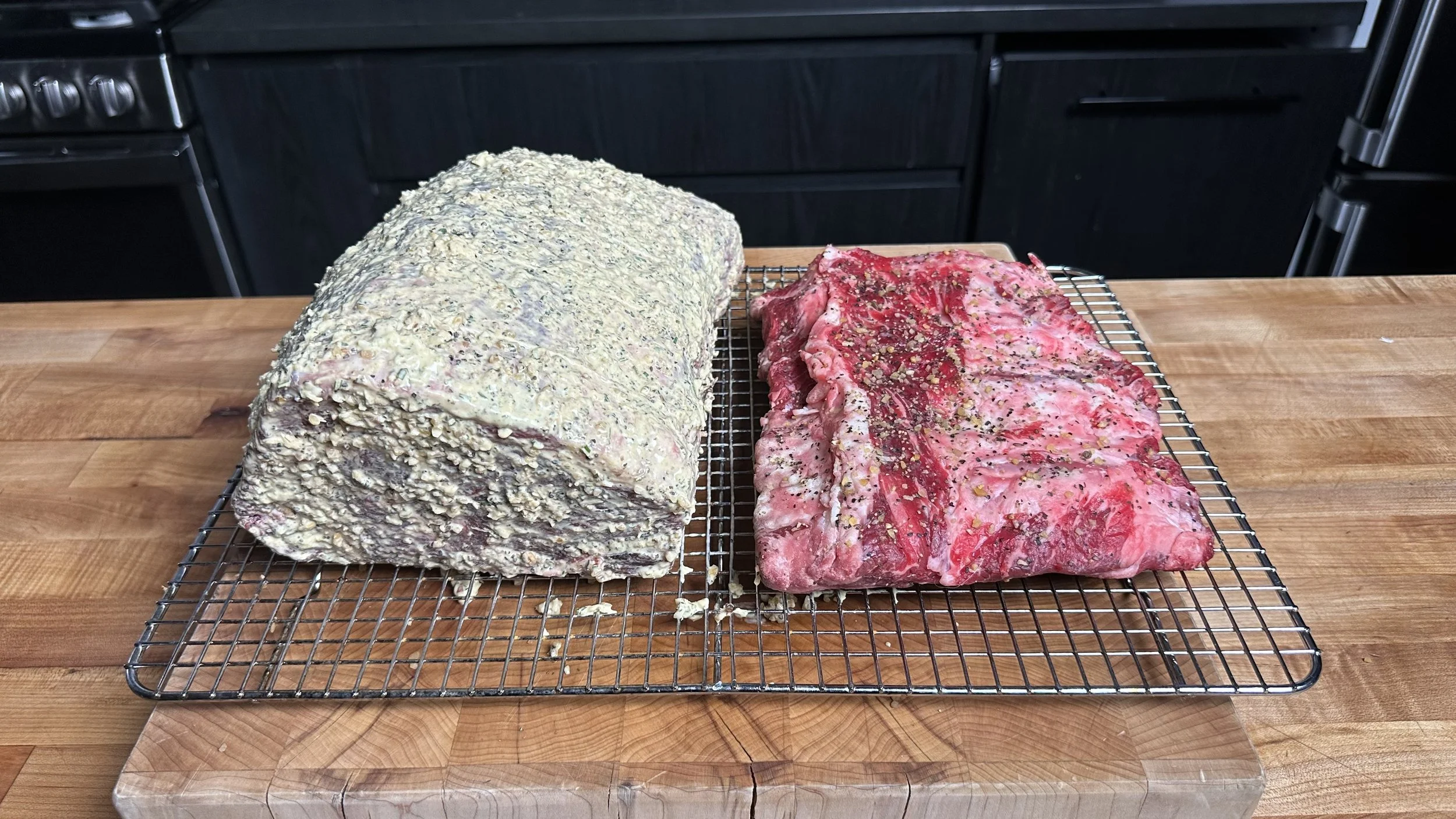
The difficulty with prime rib comes down to surface area. The crust to meat ratio is extremely low, especially when compared to a normal steak. Only a small amount of crust is enjoyed in each bite, and the center can be lacking in flavor. In this recipe we use horseradish paste on the exterior of the roast and cook the bones separately which maximizes the amount of crust to meat ratio. If you are looking for other unique methods to add flavor to the interior of your roast, check these other prime recipes out: Prime Rib with Blue Cheese and Bacon and Prime Rib Experiment.
Edge to Edge Medium Rare:
Another critical issue with prime rib is the dreaded grey band. The direct center might be medium rare, but the edges are grey and overcooked. Many recipes call for roasting at a relatively high temp (350F+), or even worse, starting at an extremely high temperature and allowing the temp to slowly come down. Reverse searing (FIRST starting in a low temperature environment and THEN searing) is how we prevent this. Starting in a low temp oven or smoker (~250F) allows our roast to evenly come up to temp. After a 30-minute rest, we then finish with a sear.
Full Recipe:
INGREDIENTS
4 bone rib roast (~10lb)
Kosher salt
Montreal steak seasoning
Horseradish Paste
2 tbsp mayonaise
1 tbsp mustard
1tbsp prepared horseradish
1 tbsp worcestershire sauce
2 garlic cloves chopped
1 tsp fresh rosemary chopped
1 tsp fresh thyme chopped
Creamy Horseradish Sauce
1-3 tbsp horseradish
1/4 cup sour cream
1 tsp dijon mustard
1 tbsp mayonaise
1 tbsp chopped chives
Dash of cayenne
COOKING INSTRUCTIONS
Serves ~5-7
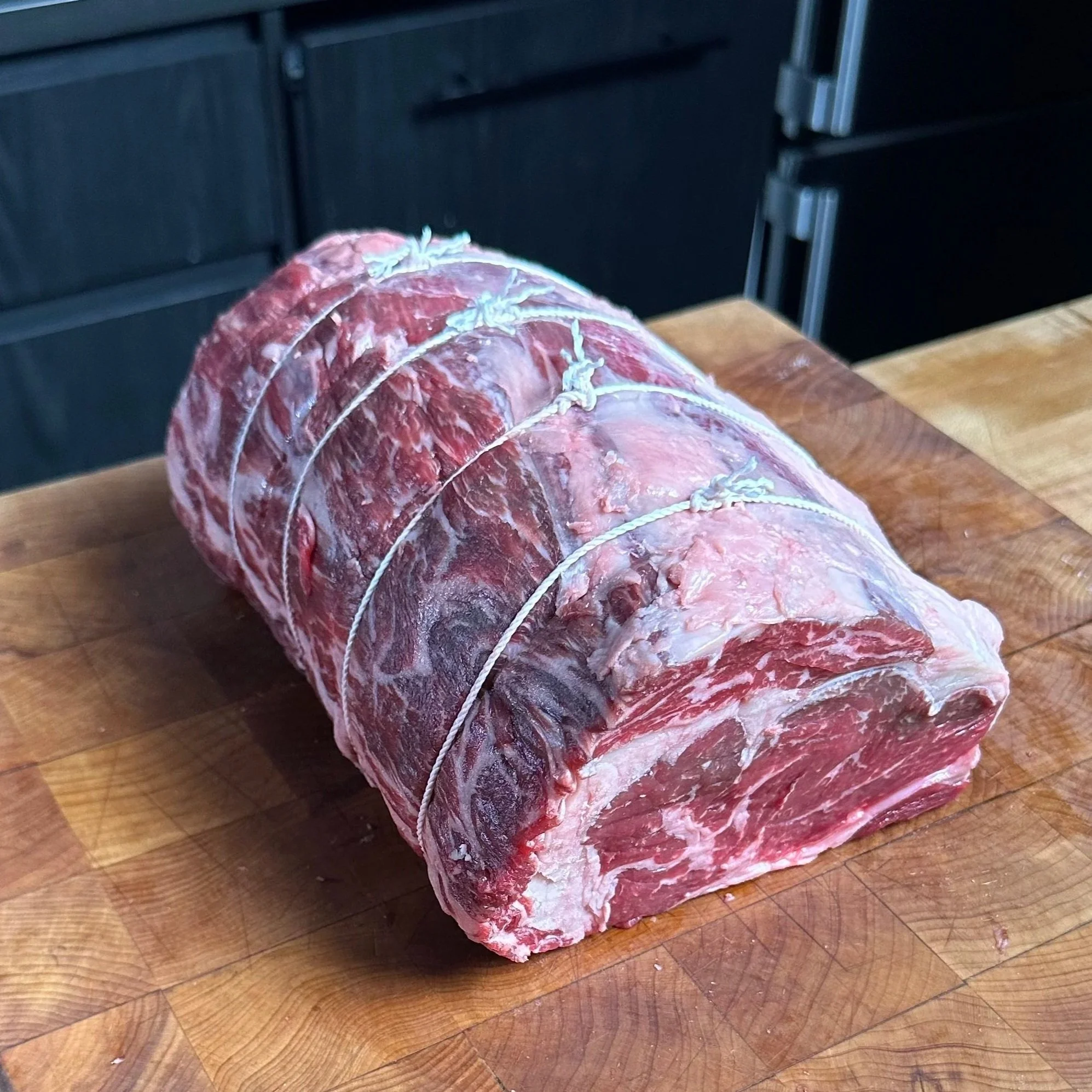
Prepare the roast and remove bones: Remove silver skin and trim rib roast. Remove the bones keeping as much meat on the actual prime rib as possible. Set the bones to the side (don’t throw them away).
Tie roast with 3-4 pieces of butchers twine. Don’t go too tight, the roast will expand while cooking.
Dry brine: Season roast and the ribs with a course rub, I’m using Montreal steak seasoning. Leave in fridge on a rack uncovered overnight to dry brine (or at least 1 hour).
Prepare the horseradish paste: Combine the mayo, mustard, horseradish, Worcestershire sauce, chopped garlic, rosemary and thyme then mix well. Cover all sides of roast in a thick layer of the paste (makes enough for a 3-bone roast). Don’t cover the ribs with this paste.
Prepare the horseradish sauce: Recipe here and also shown on the left. Set in fridge and use when serving the final dish.
Place the roast and ribs in a 250F oven or smoker, try to have the roast in the middle of the oven. Remove both when internal temp of roast hits 123F degrees for rare/medium rare and 133F degrees for closer to medium.
At this point the ribs should be fully cooked, but leave in oven during the rest if they aren’t quite tender.
Let roast rest loosely covered at room temperature for 30 minutes.
Once rested for 30 min, bring oven up to 550F or it’s highest temperature and place just the roast into the oven, searing for 5-10 min. Remove as soon as the color is good.
Since you already rested the prime rib prior, you can slice and serve immediately. Add the horseradish sauce on the side and enjoy!